To help with organisation of my portfolio, I analysed Candidate B from the Cambridge international Media Studies Portfolio because it contains an excellent demonstration of work in this area with a clear and ordered approach to research, planning and production.
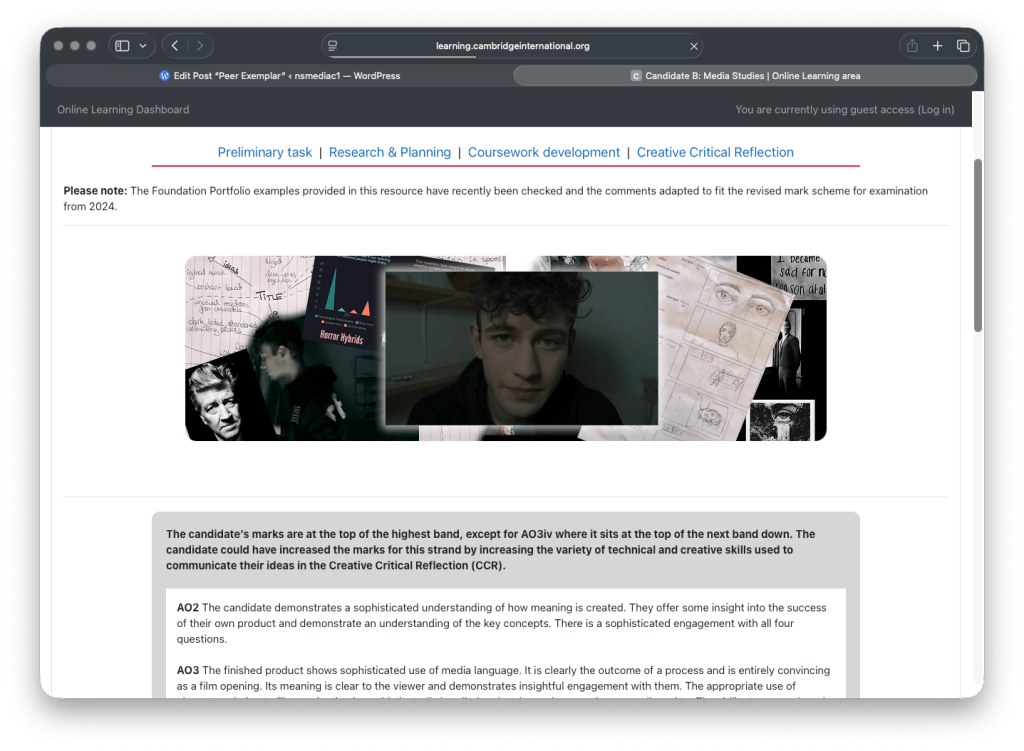
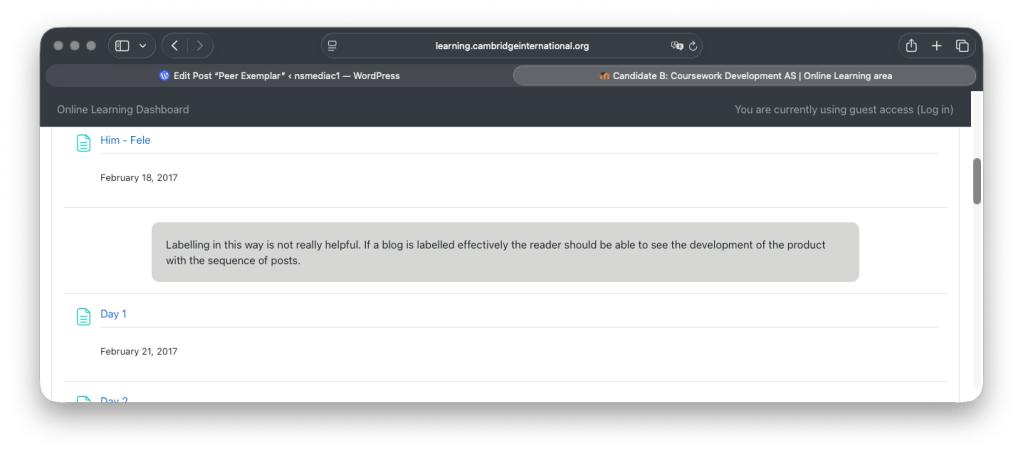
Candidate B’s work shows that use of titles is important to a successful portfolio. In instances where he has clearly labeled title, and draft order, the title immediately tells the reader what is being developed and what stage it’s in. However, where he has just tabled posts with names like days of it being 1,2, 3, Cambridge comments that this kind of labelling is precisely vague and should’ve been improved through better organisation .
What I could do better instead: I should use titles that explain both the task and the development stage rather than simply recording the day or date. This can better help me demonstrate my development process in a clearer approach, but also help with teacher feedback.
Based on my portfolio research, here is a list of things I will aim to include in my blog:
What I Will Do
What I Will Avoid
- Use specific titles for better clarity
- Show different versions of designs and aesthetics of my magazine
- Include postpone feedback
- Give out clarity on why something/element has been adapted through change
- Make the development from research to final product easy to follow with
- Miss out on titles such as “Day 1”, which can be seen as too vague.
- Uploading final designs without earlier versions.
- Adding research that does not directly correlate or influence my magazine in ways.
- Describing what I did without explaining what I learned from it.
By following these I will be able to create a structure portfolio that clearly shows the media production process.
Cambridge Media Studies candidate B exam https://learning.cambridgeinternational.org/classroom/course/view.php?id=3362 [Accessed on 6/9/26]


Leave a Reply